


If you've spent any time around a manufacturing floor, a water treatment plant, or pretty much any facility with automated equipment, you've been standing near a PLC — probably several of them — without necessarily knowing it.
The term gets thrown around constantly in industrial settings, but a surprising number of people who work adjacent to this equipment couldn't actually explain what one does if asked directly.
The One-Line Answer
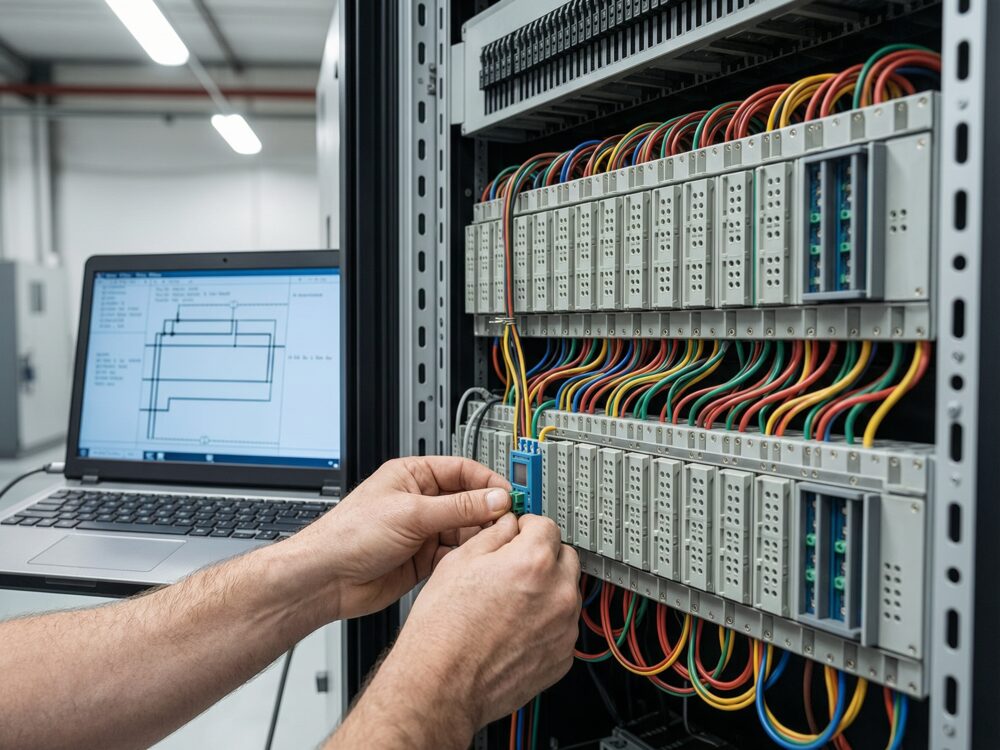
A PLC — Programmable Logic Controller — is an industrial computer that monitors inputs from sensors and switches, runs logic to decide what should happen, and controls outputs like motors, valves, and lights accordingly, all in a continuous loop that repeats many times per second.
That's the plain version. Everything below is what actually goes into making one work — and what it takes to get one working correctly.
How PLCs Actually Work
Inputs
Sensors, switches, push buttons, temperature probes, level indicators — anything feeding real-world status back to the controller counts as an input. A PLC is only as good as the information it's receiving.
Logic (The Program)
This is the actual programming — most commonly written in ladder logic, a visual programming language designed to look like electrical relay diagrams so that electricians, not just software developers, can read and troubleshoot it.
The logic decides: if this input is true and that one isn't, turn on this output. Multiply that by hundreds or thousands of conditions running simultaneously, and you've got a functioning automated system.
Outputs
Motor starters, solenoid valves, indicator lights, alarms — the physical things that actually happen as a result of the logic's decisions. This is where the PLC's "decisions" turn into real-world action.
The Scan Cycle
A PLC doesn't run its program once — it loops continuously, reading inputs, executing logic, and updating outputs, often dozens or hundreds of times per second. That speed is what makes real-time industrial control possible.
The PLC Platforms You'll Actually Run Into
Not all PLCs are the same brand, and the differences matter more than people expect when it's time to service or expand an existing system.
Allen-Bradley (Rockwell Automation) — the dominant platform across most of North American manufacturing. If your facility is US-based, there's a strong chance you're running Allen-Bradley somewhere.
Siemens — heavily used in facilities with European equipment lineage, and increasingly common in process industries like water treatment and chemical processing.
Schneider Electric (Modicon) — common in building automation and certain process control applications.
Omron — frequently found in packaging, robotics, and machine-level automation rather than plant-wide systems.
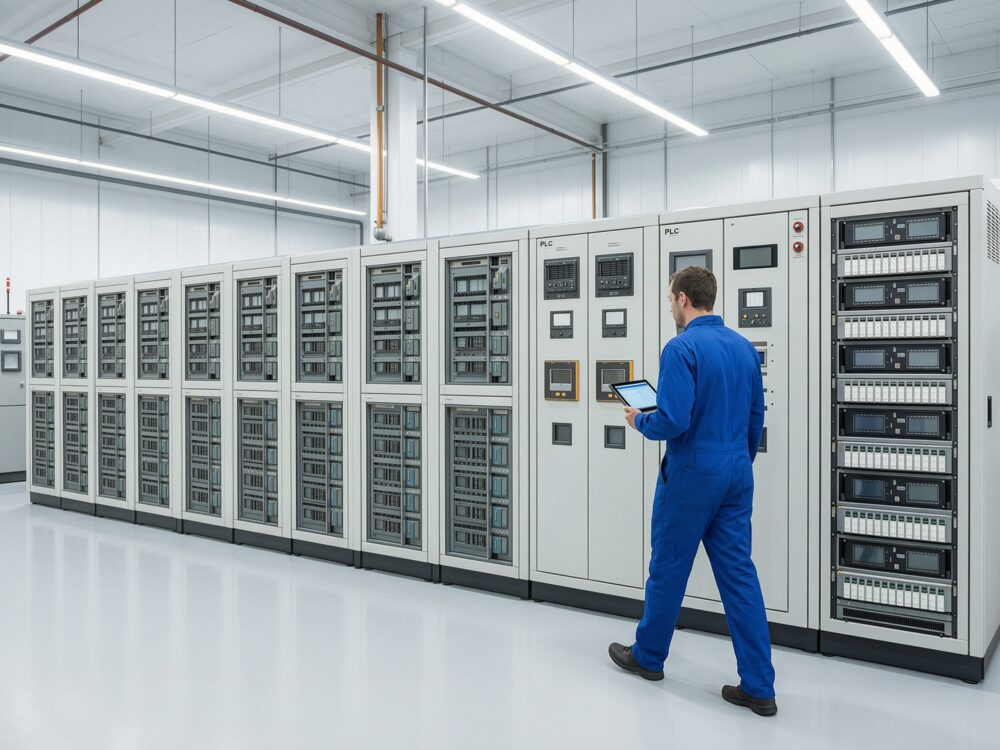
Here's the part that actually matters: these platforms don't speak the same programming language natively, and a technician fluent in one isn't automatically qualified on another. If your facility runs a mix accumulated over years of equipment purchases — which most facilities do — you need someone who genuinely works across platforms, not someone who learned one and calls everything else "similar enough."
When You Actually Need PLC Programming and Integration Help
A few situations that come up constantly:
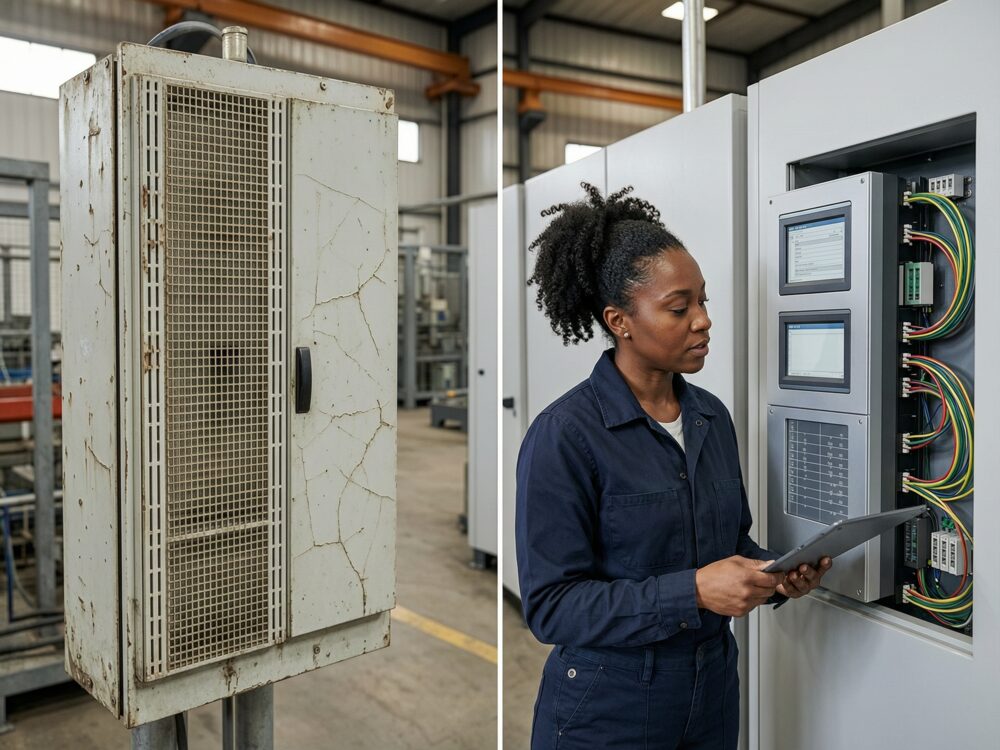
- A legacy PLC is heading toward obsolescence. Manufacturers eventually stop supporting older hardware, and waiting until it fails is a far more expensive way to handle a migration than planning it.
- Nobody currently on staff can read the existing program. This happens more than facilities want to admit — the person who wrote the original logic left years ago, and what's running is a black box nobody fully understands.
- New equipment needs to talk to an existing PLC. Adding a machine, a sensor array, or a new production line means integrating it into logic that's already running — done wrong, this creates conflicts that show up as mysterious faults weeks later.
- You're scaling from manual to automated control. Moving from operators manually running equipment to a PLC-controlled process is a full design-and-programming project, not a weekend upgrade.
Who Actually Does This Work
PLC programming is one core piece of what an industrial automation systems integrator handles — the logic and the hardware are only useful once they're properly designed, programmed, and commissioned as part of a working system.
If you're dealing with a legacy platform, planning a migration, or integrating new equipment into an existing system, our industrial controls and PLC programming team works across Allen-Bradley, Siemens, Schneider, and Omron platforms.
FAQ
What's the difference between a PLC and a regular computer?
A PLC is purpose-built for continuous, reliable real-time control in harsh industrial environments — it's designed to run the same logic loop indefinitely without crashing, unlike general-purpose computers which run many different programs and are far more sensitive to industrial conditions like vibration, heat, and electrical noise.
Can a PLC be reprogrammed, or does it need to be replaced to make changes?
PLCs are designed to be reprogrammed — that's the entire point of "programmable" in the name. Changes to logic, timing, or added functionality typically don't require new hardware unless the existing PLC has run out of physical I/O capacity or processing power.
How long do PLCs typically last before needing replacement?
Well-maintained PLCs often run reliably for 15-20+ years. The more common reason for replacement isn't hardware failure — it's the manufacturer discontinuing support and spare parts for that model, making it a business risk to keep running rather than a functional failure.
Do different PLC brands use the same programming language?
No — while most support ladder logic conceptually, each manufacturer uses its own proprietary software environment (Rockwell's Studio 5000, Siemens' TIA Portal, for example), and code isn't directly portable between platforms without a full re-programming effort.
Is it cheaper to fix an old PLC or replace it with a newer one?
It depends on parts availability and obsolescence risk — repairing a working legacy PLC is often the cheaper short-term option, but if the manufacturer has discontinued support, a planned migration is usually more cost-effective than waiting for an unplanned failure with no replacement parts available.
Need PLC Programming or Integration Done Right?
Whether it's a legacy migration, a new equipment integration, or a system nobody on your team can fully explain anymore — we work across every major PLC platform.
Schedule a free virtual quote and walk through your specific setup with a real controls engineer.
Schedule My Free Virtual QuoteOr call 1-888-586-5554 — 24/7 for industrial and commercial projects.