


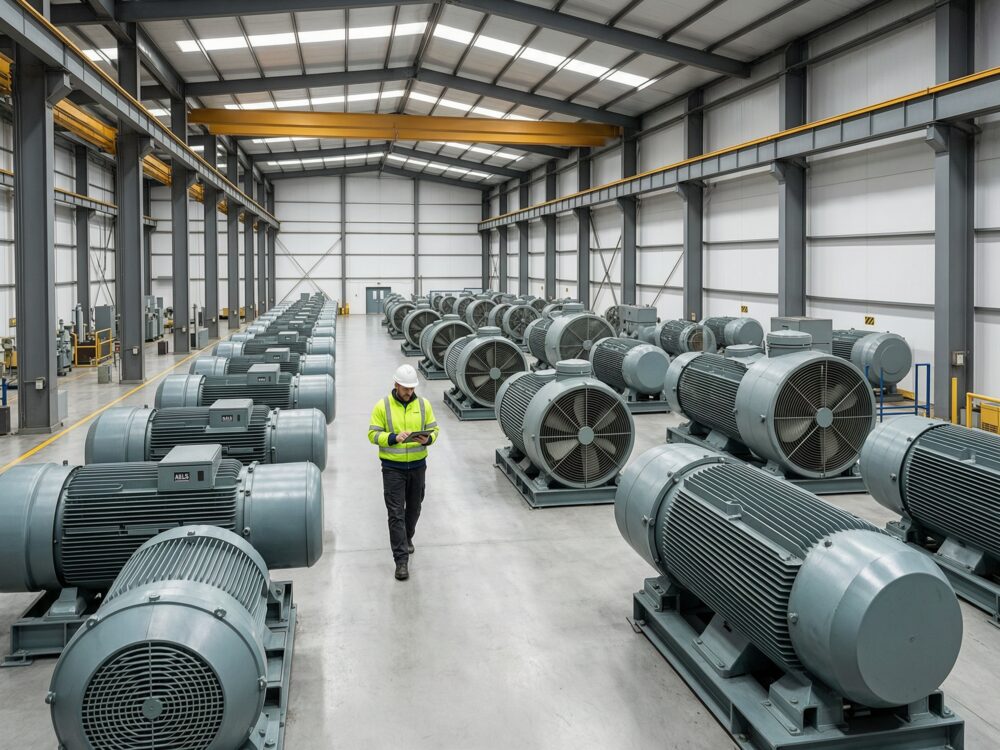
If your facility runs more than a handful of motors — pumps, fans, conveyors, compressors — chances are good you've either already got a motor control center, or you're the person currently trying to figure out if you need one.
Here's the plain version: a motor control center, or MCC, is a single enclosure that houses the starters, disconnects, and protective devices for multiple motors in one coordinated, centrally accessible location — instead of individual starters scattered across your facility, each one its own separate point of failure and maintenance headache.
The One-Line Answer
An MCC consolidates motor control — starting, stopping, protecting, and monitoring multiple motors — into one centralized, standardized enclosure that's easier to maintain, troubleshoot, and expand than scattered individual starters ever will be.
What's Actually Inside a Motor Control Center
Motor Starter Buckets
Each motor gets its own removable "bucket" — a self-contained unit with the contactor, overload protection, and disconnect for that specific motor. Buckets can typically be pulled and replaced without shutting down the entire MCC, which matters enormously when one motor fails and the rest of your facility can't afford to stop.
VFDs (Variable Frequency Drives)
Many modern MCCs integrate VFDs directly into the bucket design, letting individual motors run at variable speeds instead of simple on/off control. This is where energy savings and process precision usually come from — a motor running at 60% speed when full speed isn't needed uses meaningfully less power.
Main Bus and Distribution
The vertical and horizontal bus bars running through the MCC distribute power from the main incoming feed down to each individual bucket. This is engineered specifically for the facility's total motor load — undersizing it is a common and expensive mistake in poorly planned installations.
Control and Communication Wiring
Modern MCCs typically network back to a PLC or SCADA system, giving centralized visibility into which motors are running, which have faulted, and what the current load looks like — instead of someone physically walking the floor to check.
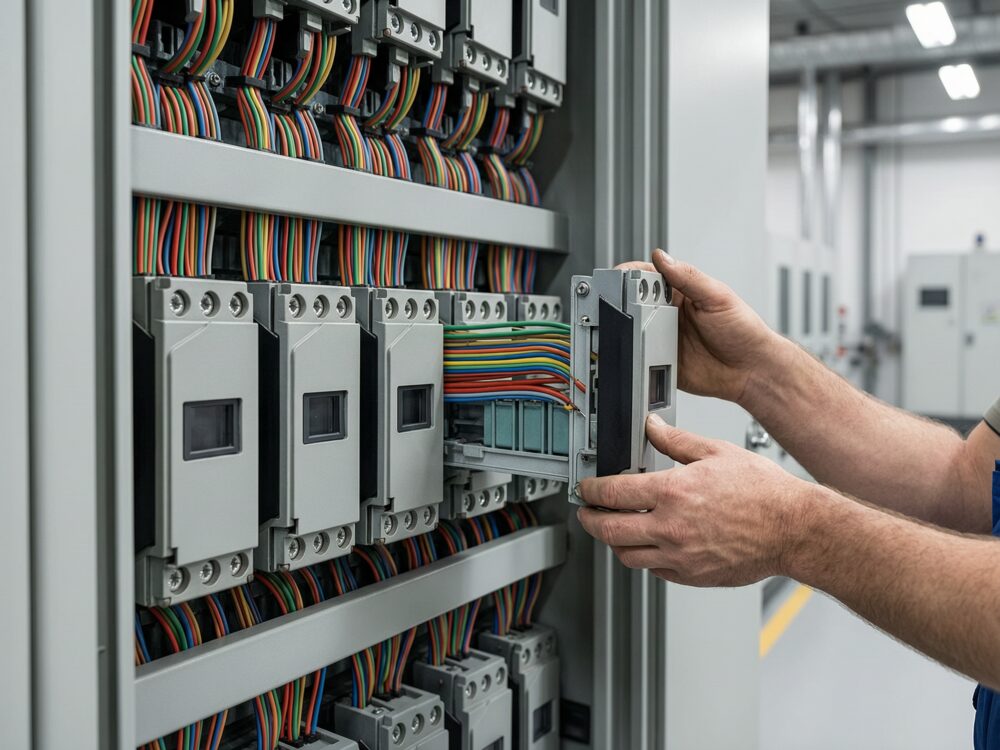
What the Installation Process Actually Looks Like
Load Assessment & Design
Before anything gets ordered, a proper installation starts with cataloging every motor the MCC will serve — horsepower, voltage, starting characteristics, and whether each one needs simple on/off control or VFD-driven variable speed.
This is where the bus sizing, bucket count, and enclosure dimensions all get determined — get this step wrong and you're either paying for capacity you don't need or building something that's obsolete the moment you add one more motor.
Fabrication
MCCs are typically built to UL845 standards specifically (the UL certification specific to motor control centers, distinct from general panel fabrication standards). Buckets get wired, labeled, and tested individually before the whole assembly ships or gets built on-site.
Installation & Power Connection
The enclosure gets set, anchored, and connected to incoming power and each individual motor circuit. This is typically the most disruptive phase if it's a retrofit into an already-running facility — sequencing this around your production schedule is where an experienced integrator earns their fee.
Commissioning
Every bucket gets tested individually — verifying the right motor starts, stops, and protects correctly, that VFDs are configured to the right parameters, and that PLC or SCADA communication is actually reporting accurate status back to wherever your team monitors it.
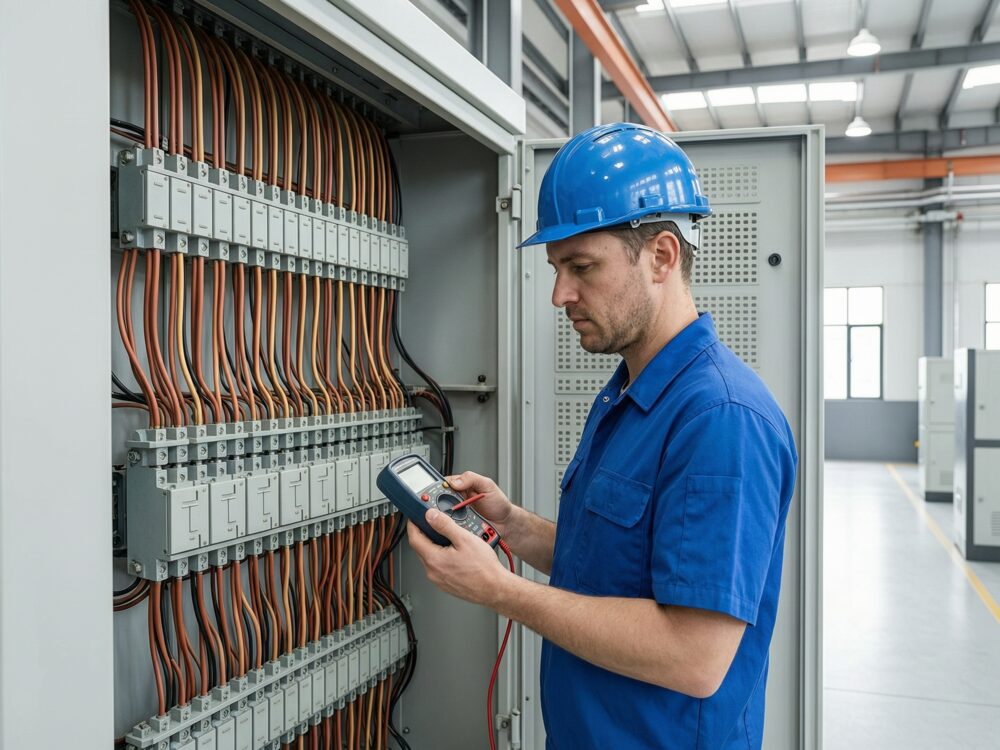
MCC vs. Individual Motor Starters: When You Actually Need One
If you're running two or three motors total, individual starters near each motor might genuinely be the simpler, more cost-effective answer — an MCC's real value shows up at scale.
The signs it's time to consolidate into an MCC:
- You've got motors scattered across multiple locations with no centralized way to see what's running or what's faulted.
- Maintenance means hunting down individual starters in different rooms or corners of the facility instead of one accessible location.
- You're adding motors faster than your electrical infrastructure was originally sized for, and every addition means another standalone disconnect and starter.
- You need — or want — centralized monitoring through a PLC or SCADA system, which is far easier to wire into one MCC than into a dozen scattered individual starters.
Who Actually Builds and Installs These
MCC installation is one piece of the broader work an industrial automation systems integrator handles — the same design, fabrication, and commissioning process that applies to control panels generally applies here, just scaled to motor-specific hardware.
If you're ready to talk through your specific motor load and facility layout, our industrial controls and PLC integration team handles MCC design, fabrication, and installation as part of full control system projects.

FAQ
How long does a motor control center installation take?
It depends heavily on scope — a small MCC with a handful of buckets might take days once fabricated, while a large facility-wide installation with dozens of motors can span weeks of design, fabrication, and phased installation around production schedules.
Can an MCC be installed without shutting down my whole facility?
Often yes, with proper phasing — motors can typically be cut over to the new MCC in groups rather than all at once, though this requires careful sequencing planning during the design phase, not something figured out on installation day.
What's the difference between an MCC and a standard electrical panel?
A standard panel typically distributes power and houses circuit breakers for general loads. An MCC is purpose-built specifically for motor control — starters, overload protection, and often VFDs — and is fabricated to UL845 standards specific to that function.
Do all the motors in an MCC need to be the same size or type?
No — buckets are sized individually to each motor's specific horsepower and starting characteristics, so an MCC can house a mix of small and large motors, simple starters and VFD-driven units, all in the same enclosure.
Can an existing MCC be expanded later if we add more motors?
Often yes, if the bus capacity was sized with future growth in mind during the original design — which is exactly why proper load assessment up front matters, since retrofitting inadequate bus capacity later is far more disruptive and expensive.
Ready to Talk Through Your Motor Load?
Whether you're consolidating scattered starters into one MCC or designing a new facility from the ground up, we handle the full process — load assessment, fabrication, installation, and commissioning.
Schedule a free virtual quote and walk through your specific setup with a real controls engineer.
Schedule My Free Virtual QuoteOr call 1-888-586-5554 — 24/7 for industrial and commercial projects.